
M○C△ WEEKLY Round-UP 8/10
We got NEWS. We got THOUGHTs. We got ART! We got you covered.


Don’t miss an edition, hit this li’l ☝️☝️ subscribe button ☝️☝️ right up here. And catch up on every edition that passed you by.
In This Week’s Round-Up:
Using AI to Bring the Dead Back to Life is as Dangerous as Black Magic
What Art Blocks 500 Gets Right, Wrong, and Prophetic about Preservation
Okay, Let’s Get On With It
The Crypto Art Side
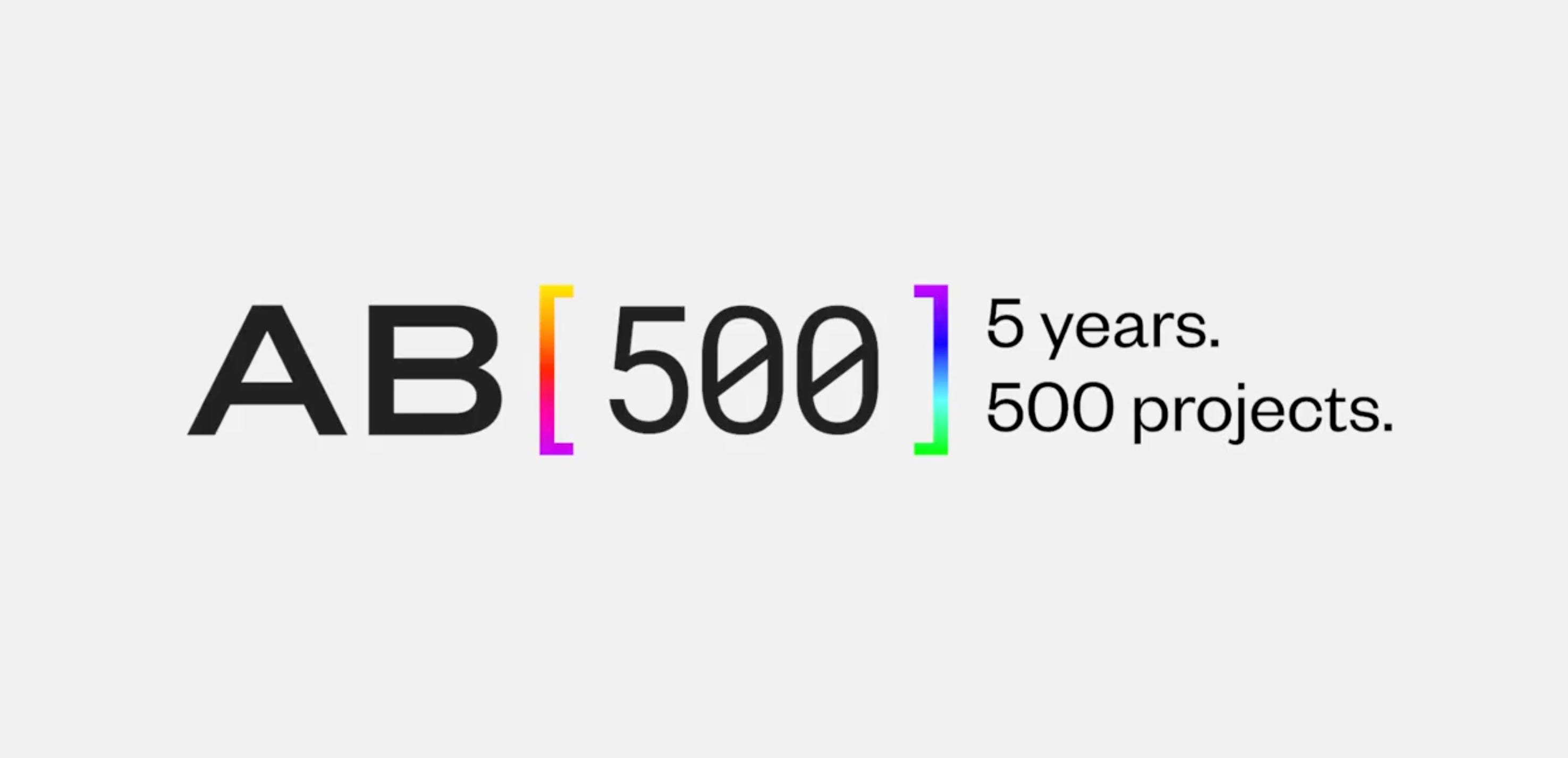
It’s hard not to be impressed at what Erick Calderon (Snowfro) and Art Blocks have built. In the past year, countless foundational and forward-thinking crypto art platforms have folded (Makersplace, Async.art, KnownOrigin), while even established businesses like SuperRare pivot at warp speed to remain relevant and prpfitable. Yet Art Blocks has managed to thrive despite bulls and bears and cultural shifts. Much of that is due to Calderon himself. He’s the most vocal and avowed supporter of the art on his platform, and because he has raised his own cultural capital to the level of icon, oscillating between an investor and theoris and influencer, Art Blocks itself reaps the rewards —socially, culturally, and economically— of his public presence. The platform has survived long enough to taste the fruits of its earliest projects: Ringers, Fidenzas, and Gazers were all minted here, and unlike so many of its peers, Art Blocks still enforces royalties on its dedicated secondary market. Good for artists, good for the platform, good for integrity. They managed to strike the right balance between curated, high-profile releases and those who, sure, have the technical knowhow to use their platform but lack cultural capital. Whatever the reasons they’ve done what they’ve done, it’s worked. Surviving for five years in crypto art is no joke. And so I’m not surprised that Art Blocks has chosen to celebrate their milestone.
The way in which they’ve chosen to celebrate, however, is unusual, and I think worthy of breaking down into bits.
The graphic above heralds Art Blocks 500, which Calderon announced in a blog on Wednesday. The intent is to “[contextualize] everything released within our Curated, Playground, Factory, Presents, Collaborations and Explorations categories as a finite and complete set, with these 500 projects representing a foundational era in the generative medium.” In other words, come November, when the 500th project is schedule for release, Art Blocks’ history will schism in two. Those first 500 Art Blocks projects, beginning with the release of Chromie Squiggles in October of 2021 are to be set aside as the genesis of whatever the platform henceforth becomes, and by putting “a glass case around these projects and [focusing] resources towards the ongoing work of preserving and elevating everything within,” it seems they hope to permanently suggest that these works and their artists are worthy of canonization as innovators of the form.
Which, hey!, is pretty neat! We obviously love the preservation of history at MOCA, and there’s no doubt that all Art Blocks’ early adopters, who collectively pioneered the long-form generative art into a massive movement, deserve to be recognized for their efforts. Some of the Art Blocks 500 projects are wildly forward-thinking in their aesthetics and process, others are copy-catted and lackadaisical, but all were experimental risks on a platform that, from everything I understand, did little to handhold its participant artists and asked them to bend their processes to Art Blocks’ own code-base.
It’s also fascinating that Art Blocks, probably the most high-profile platform in crypto art (at least equal with SuperRare), is clearly putting their weight behind the idea that this art movement —whether you want to call it crypto art, blockchain-native art, long-form generative art alone— is still in its early stages. The implication of Art Blocks 500 is an assumption that there will be many more projects to come, much wider adoption, and quite a ways to go until Art Blocks ceases to be. All is reminiscent of that common refrain heard back during my own crypto art initiation: “We’re still early.” But as influence and acclaim has calcified around a few figures, I rarely hear that claim anymore except as proffered by people who buy XCOPYs for seven-figures, anticipating a future valuation of eight-or-nine-figures once “people see what’s happening here” or something like that.
Still, I find myself wary about crypto art’s steel-jawed insistence that everything "early” is therefore important. While it’s common within cryptocurrency and tech for first-mover advantage to be rewarded, that’s usually because of market dynamics: cutting-edge tech meets die-hard community support, accrues resources and name recognition in advance of competitors, and the market dries around it like concrete. Which is why Instagram could simply copy Snapchat stories and Tiktok videos. And why Cardano is still a top-10 coin by market cap.
But in an artistic context, there’s never been especially frenzied support for those who are early. Quality has always been valued over innovation. In traditional art contexts, it’s more obvious why. Art isn’t created in a vacuum. Surrealism was inspired, for example, by the metaphysical art of Italians like Giorgio di Chirico and writings of Guillaume Apollinaire, and while hard-and-fast surrealism as a doctrine and movement did not factually emerge until Yvan Goll and Andre Breton’s Surrealist Manifestos were published in 1924, it’s not so easy to say “Surrealism did or did not emerge here, was present in this work, etc.” With the blockchain being more of a medium than a style, valuing early adoption is more reminiscent of photography or computer art. While I can’t find price valuations for the following pieces, the earliest surviving photograph and first accepted computer artwork (to my knowledge) —respectively, View from the Window at Le Gras by Nicéphore Niépce, and Computer Nude (Studies in Perception I) by Leon Harmon and Ken Knowlton— are generally treated as foundational parts of the canon/continuum.
But does the 450th user of Art Blocks have any legitimate claim to early experimentation? When literally hundreds of other artists have been there and done that, are such contributions —outside of the confines of the specific artworks themselves, some of which are undoubtedly more intrinsically important or creative than others— really worthy of being singled out as special? There’s a certain round-number misattribution at-play here. Should an Art Blocks work created in December of 2025 really be stratified away from others created in November? While I’m thrilled that many artists I love and admire —like DaimAlYad, Hideki Tsukomoto, Beervanger, ge1doot, etc— will hopefully see some market traction for their placement in the first 500, there’s an arbitrariness to the past and future of Art Blocks that every coming artist will need to reckon with.
Still, pretty fucking cool that early pioneers are going to be recognized for their work. That happens so rarely and is so desperately needed, and especially with an institution as monumentally important as Art Blocks adding their voice to ours, it’s a thrilling reason to revisit some of these works and parse through the experimentation therein. Hopefully, it inspires many others to visit worlds they did not know existed. Hopefully, Art Blocks is a telescope and launchpad both.
The last thing I want to touch-on here concerns the long-view I’m always mentioning, the retrospective of crypto art as seen by scholars some 10-or-20 years from now. Art Blocks is unique. It’s an engine, a marketplace, a business, a platform, an aesthetics-generator, a market-maker, some cross between salon and school and patron and gallerist and paintbrush-salesman. Future success isn’t guaranteed to any of us, especially Art Blocks. Generative art has been declared dead many times, and plenty of compelling arguments have been made to minimize Art Blocks’ success and importance as little more than opportunistic market dynamism. How will history judge them? Art Blocks 500 seems like an attempt to shore up artistic legacy, to put a bow on its scalp and climb into a box and present itself as a gift to future academics and historians. Having a divide between past and future allows a bifurcated approach: the first 500 works postured as historically significant and pure, freeing their financial arm to go wherever the money is in the future without disturbing legacy. Which is kind of genius, honestly.
God-willing, their gamble will pay-off, and other institutions/platforms will manifest a financial incentive to preservation of the past. Because crypto art works on financial incentives, and they have never hitherto aligned with historical preservation. Maybe Art Blocks will be an innovator in this regard too. Let that be so, and you can count me among Art Blocks’ loudest cheerleaders.
The Tech Side

I’ll tell you this: it’s a lot more lifelike than the Tupac hologram.
“It” being the resurrected-via-AI likeness of Mr. Joaquin Oliver, the deceased 17-year-old victim of the 2018 school shooting in Parkland, Florida. Oliver was one of 17 killed in the shooting. He’s been dead for 7 years. What Jim Acosta — “the former CNN chief White House correspondent who now hosts an independent show on YouTube”— interviewed last week on his Youtube show was not Joaquin Oliver, for reasons mostly pertaining to Oliver being dead. What Acosta interviewed, instead, was an AI re-creation of Joaquin Oliver, an AI re-creation of Joaquin Oliver that was created by his parents.
The article I’m citing from, for Variety by Ethan Shanfield, is heart-wrenching at times as it describes the reasons for the Oliver-AI’s creation. Once you get past the initial “What the fuck” of it all, you realize this is a heart-wrenching situation. Quoting Shanfield:
[Joaquin’s father] Manuel said they created the AI, in part, so that he and his wife Patricia could hear their son’s voice again. ‘Patricia will spend hours asking questions,’ he said. ‘Like any other mother, she loves to hear Joaquin saying, ‘I love you, Mommy.'' They also launched this project so that Oliver could have a voice in conversations around gun safety. ‘Now, Joaquin is going to start having followers… He’s going to start uploading videos. This is just the beginning.’
I wanted to quote that passage in its entirety because it made me cry. Would I not react the same as Patricia and Manuel given the context? If my son were taken from me in an act of cruel and random ultra-violence, and a technology then arrived where I was able to momentarily nullify my pain by hearing his voice, speaking with him as if he truly exists, watching his eyes watch me just as they watched me when he was alive, even give him the agency that was stripped of him, I would do exactly the same. I would do the same 101 times. I’m no special case of strength. I’m the baseline. I delay pain, I defer heartbreak, I avoid grief like the plague. Grief is endless, it has peaks and valleys, and even temporary release from that grief would be too appealing for me to pass up. It was for Manuel and Patricia. It will be for parents, children, widows and widowers in the future. The uncountable grief-stricken to come will be unable to resist, that I promise you.
I’m not even going to comment on Acosta’s interview, though Lord knows I could. So much to say about how media treats AI, playing it for outrage or clicks. Or that the Joaquin Oliver AI was partially designed as a kind of uber-lifelike puppet for pro-gun-control ideology. Should our souls and likenesses ever be used to interject into politics?
And yet, these issue almost seem like afterthoughts, don’t they?
AI-Joaquin taking on a literal life of its own using the likeness of a boy who was killed, how dystopian that is, how it confuses the barrier between life and death perhaps to a point that borders on demonic, does any of it really matter when you’re feeling that pain yourself? That today’s AI technology is advanced enough to accurately capture and communicate our opinions, facial features, and tone of voice. that our AI-generated facsimiles can succeed in call-and-response exercises with those who would be most sensitive to cognitive or linguistic dissimilarities, that is not on the docket, though it’s so fascinating.
The only thing on our docket is grief. Screw the cultural, this is all about you and I, about personal consequences. Our lives, everyone’s lives, are going to change drastically should this technology proliferate at all. Because we are human beings, and human beings (barring the zen masters, all eight of them) seek at all times to escape from pain, and pain is endless and pursues us always as successfully as death does. How does our paradigm of suffering change should AI let us pretend even momentarily that our dearest-departed companions remain alive and well? Truly, is there another abyss its more important for us stare straight into?
I’m going to offer now some fairly horrid situations, and I apologize for doing that, I hated writing them, but I think it’s necessary to communicate just how disruptive this AI-resurrection technology might be to our basest existential instincts. I offer three fictional possibilities for life after death when death isn’t as deathly as it was, and you can tell me whether you think they’re accurate, whether you’d fall into the same traps I most certainly would. Again, I’m so sorry, but I have to do this in the second-person:
Your partner dies of cancer. You have been together for so many years. And then, suddenly, you aren’t anymore. It’s near impossible to drag yourself out of bed in the morning, let alone think about life after them. Empty bed, empty kitchen, empty you. The idea of new romance is noxious, almost literally nauseating. The carpet of grief stretches on endlessly, and you can take only shuffling steps along it. What suffers? More like what doesn’t? Can’t work, can’t sleep, don’t eat, lash out, your life is falling apart. And yet, you can recreate them. You can take their writings, their musings, phone calls, photographs, all of it and re-create your lost lover. By doing so, you feel you are saving yourself. But how will you ever get past the pain of their loss when their phantom literally haunts your halls? Is it not bad enough to hear their voice in your memory? Now it follows you to sleep and wakes you up in the morning with charming quips and playful whispers. It discusses the news with you while you drink coffee. It is waiting with accolades for when you get home. It both is your lost love and is not. And like many complicated relationships, this one will not work, even if for a long time you believe it might. You will do as we all do or have done, and you will rely on the phantom of something dead. And it will never be what your lost love was, it will not be enough to fill you, but it will be enough to nibble on, it will never sate you but just draw more attention to your hunger, but you will teach yourself to eat very little, you will never leave that malnourished void because all that awaits you outside of it is more pain, incomprehensible pain, a pain larger now than it has ever been. Pain deferred only multiplies; pain carries compounding interest. So now, you must leave the AI version of your lover again? You must bury your heart a second time. You must make the decision for yourself, too. Now, you must kill your loved one. That, or never ever escape their influence, as it reaches to you from beyond the grave.
Your parents die in a car accident. No warning, no goodbyes. A few seconds pass, and now you are an orphan. But there is so much you were relying on them to help you with. Things you needed them for. Advice about marriage. Help with raising children one day. What mower should you buy for a yard of your size? How do you clean the gutters? Family recipes you never learned, photo album pictures you never got context for, light admonishments you would pay any amount of money to hear once more. These things in any other time would be lost. Not anymore. Now you can have your parents in their ideal form, and at a freakishly reasonable price, no more than a Netflix subscription. You have AI parents now. They talk and act and look like your parents, they can be called upon at a moment’s notice, summoned like djinns from bottles, they never grow older (and so spare you the pain of watching them become frail), they never raise their voices (and so spare you the pain of disappointing them), they never call at inopportune moments and then get angry at you for responding too tersely or with insufficient enthusiasm. But they are so like your parents. So you lean on them for advice. They teach you things. They tell you they’re proud of you. But they’re not your parents. They’re made by a company. A corporation probably. And that corporation, consciously or subconsciously, wants you to believe certain things, act a certain way, adhere to a way of living. Maybe that’s why your AI mom keeps recommending that one brand of wasp killer. Or why your father is more and more adamant that you should really be opening a new line of credit. Think about the airline miles! Still, they teach what needs to be taught and direct you when you need direction. Will you ever get out from under their corporatized influence? Will you ever rebel from this version of your parents, literally designed to please you? Part of growing up is seeing your parents as fallible, weakened, human. Only then can you learn from their mistakes, respond to their inefficiencies, grow for the next generation. What relationship do you have with them, with yourself, now that they are none of these things?
Your child dies and the grief is immeasurable, spoken about only in hushed tones now as it has been for time immemorial. The pain of losing a child was reason enough for the Greek Goddess Demeter to create winter. You too would create eternal winter, if only to feel outside what you do within. And yet, calling to you always is a salve, if only in brief moments, in the form of your son. As you remember him. Always smiling. Always sweet. Never fussy or unintentionally cruel. You can carry him where you go, literally. He will always be your best friend. The rest of the world, material as it is, be damned. Why would you ever go outside? Why would you ever leave his side? Truth is, we both know, you won’t.
These are real, my friends. Or they are about to be. These are the real ways this technology will be used if it spreads. Grief will no longer be vanquishable, even over time, because it can be pushed away and saved for another day, always at double the price, but happily paid later. Many will die from this debt. But they will accrue it. What Jim Acosta has done, really, is tell the world that this technology exists, and that it already exists in a quite impressive form, and that’s maybe the most dangerous single encroachment of AI unto the human experience. AI kills us all in a fireball, fine, sure, okay, quick and dirty and then we’re donezoes, onto the next life. AI keeps us all enslaved to grief —and it will, because I could literally imagine no more lucrative industry— and the outcome is far worse than anything I’ve ever imagined before.
The Finance Side

Perhaps the top signal of all top signals is the existence of articles like this, NerdWallet’s Best Crypto Exchanges, Platforms & Apps for 2025, a guide I did not know anyone even was asking for, written on a platform that I’ve never seen demonstrate any real interest in crypto as an ecosystem. This, I suppose, is the point. We’ve spoken so much in this newsletter about the many forms mainstream crypto acceptance seems to be taking, from the integration of JPMorgan credit card purchases direct into Coinbase to the soon-to-be acceptance of cryptocurrency as collateral in home mortgages offered by Fannie May and Freddie Mac. This, however, is something we haven’t spoken much about: exchanges. Specifically centralized exchanges. Custodial cryptocurrency exchanges, optimized for ease-of-use and targeted not at crypto-minded individuals like you and I who are comfortable (as comfortable as one can be) navigating Metamask-and-the-like, but at the layperson. Companies that are warring not with Phantom and Backpack and Metamask but with the stock market itself, the crypto ETFs which are still pulling in billions a month in inflows. There are more of these exchanges than I could have imagined. They are larger and more profitable than I would have expected.
And they are most definitely at war with one another.
When FTX collapsed in 2022, it was holding about $8-billion of customer funds, and maintained a staggering valuation of $32-billion. Coinbase, now publicly traded under the ticker COIN 0.00%↑ is valued at almost $80-billion. Gemini, Robinhood (where crypto is an important part of its $100-billion+ valuation), Crypto.com are all multi-billion-dollar institutions, and each do more-or-less the exact same thing: let consumers purchase crypto that they hold on the consumer’s behalf. The layperson is not interested in advanced trading tools. Quite like with Schwab and E-Trade operating for the retail trader predominantly, these exchanges are targeted at regular folks who just want some crypto exposure. They are not lending, they are not yield farming, but they may want access to crypto’s immediacy: sell at a spike, buy at a low, without waiting for the accepted weekday trading periods of traditional stock market ETFs, where opportunities arising from volatility may pass by if they aren’t between the hours of 9:30-4:00pm EST. Apparently, this is a much larger market than I thought.
The Nerdwallet article mentions exchanges like Kraken, Uphold, Interactive Brokers, and Fidelity Crypto, all names I’ve either never encountered or have only stumbled upon briefly. As of this week, the Peter-Thiel-backed exchange Bullish, preparing its IPO, is “targeting a valuation of up to $4.23 billion in its United States listing, the company said in a filing on Monday, launching its roadshow to capitalize on the momentum built by digital assets amid regulatory clarity,” as per Ateev Bhandari at Reuters. We haven’t even mentioned Binance, whose $BNB-coin is the 5th largest cryptocurrency in the world. Mind you, I’ve already name-checked ten separate cryptocurrency exchanges in the past two paragraphs. There are 19 individually mentioned on Cryptonews’ list of Best Crypto Apps and Exchanges, 15 of which I have not mentioned so far and have also never heard of. Each has presumably the same goal: capture as much of the retail crypto market as possible.
There’s much sense, naturally, in launching a crypto exchange right now, given the friendly air of deregulation the U.S. government has taken to crypto since Trump’s second term as president began in January. But still I find myself staggered by the sheer number of different apps vying with one another for supremacy via marketing alone. There’s only so much that can be promised to consumers as an exchange. Various sign-up bonuses, I suppose. Coinbase offering 5% APY to those holding USDC on its platform, though I suspect that the general public, if they’re investing in crypto, sees little value in holding stablecoins. And from talking to people in my life, I know many retail traders remain wary of purchasing crypto directly through centralized exchanges; if FTX —which had its name on the Miami Heat’s stadium— could collapse so suddenly and so fully, how to know they won’t lose thousands once more? It’s an uphill battle every company not named Coinbase or Robinhood has to engage in: how to convince consumers to bypass larger, name-recognized, more trustworthy apps and use them instead?
Perhaps many of these exchanges —which differentiate themselves from another by linking with different DEXs, offering varying levels of professional trading support, integrating other web3 apps easily, and maintaining competitive fee structures, without mentioning those which offer rewards and bounties and things like that for crypto purchases— are targeting smaller segments of the market with more deployable cash. I’d guess there are countless traditional hedge funds and financial planners operating in the U.S. alone, so there might as well be a whole stratum of exchanges to take advantage of every level of trader. 100 clients with $1-million each invested into crypto is equivalent to 200,000 users with $500 invested, though I wonder whether money managers would be as remiss to use platforms without much name-recognition or cultural capital as smaller retail traders would be. It’s all about where the money is held, not about the tools available around it.
I had hoped I would come to more of a profound conclusion about the state of crypto by the end of this column, but I’ve only succeeded perhaps in revealing what has been revealed to be: that many many many companies seem to see crypto trading as lucrative enough a market to launch a multi-billion dollar cottage company into. Will self-custodial wallets ever realize that there’s so much money for the taking if they only improve their own UI/UX? Probably not! But to all you ace programmers and would-be financial titans out there, I present to you an opportunity to disrupt this already overstuffed market: a self-custodial wallet that cannot interact with apps or dApps or websites and cannot therefore be hacked, can only be accessed with a hand-written private key, and is not at risk of platform failure a la FTX. Maybe with a swap feature. That’d give Thiel and his ilk the ol’ what-for.
DeCC0 of the Week
Art in the Wild
Dev Corner
This week, our devs:
• Made good progress on ElizaOS Agent plugin
• Accomplished DeCC0s back-end work
• Fine-tune the Eliza character file-generator
• Reevaluated Hyperfy/ROOMs integration for the MVP
Quote of the Week
“A great artist is always before his time or behind it.”
Do you have some news that simply must be shared? Send us a DM