
Three. BIG. Things. 4/26
If you missed it, we got it. An art, tech, whatever newsletter.


This Week’s Three BIG Things:
Anthropic’s Mythos Hack is too Instructive to Ignore
World Liberty Financial vs. Justin Sun Has Become a War Overnight
Can Royalties Ever be Resurrected?
Okay, Let’s Get On With It
1. TransientLabs Claims to be Bringing Back Artist Royalties; Will Anyone Pay Them?
The issue at-hand is not one of attempt, it’s one of reception. Earlier today, Marco Peyfuss, CEO and Co-founder of Transient Labs, announced that this week his platform would be reviving a standard long abandoned: chain-enforced artist royalties.

The part of Peyfuss’ tweet that’s cut-off reads, “Once live, any new contracts deployed through Transient will enforce royalties on all secondary sales, even on OpenSea.” If Peyfuss and Transient succeed, it will be among the only overtures in modern crypto art aimed at restoring the standard of artist royalties. While we remember these royalties as being once willfully ubiquitous across crypto art, that’s not exactly accurate. Championed initially by DADA.art in their pioneering 2017 collection, Creeps & Weirdos, (in which “60% [of profits] would go to the collector, 30% to the artist, and since we are a collaborative community, 10% would go to DADA’s community fund”) achieving any congurent kind of creator payout across platforms required a cultural fight. As Bea and Judy of DADA wrote in their May 2021 article, Beyond Resale Royalties, “It took a group of brave artists led by Matt Kane, Coldie, and Sparrow Read to organize amid a global pandemic and negotiate a 10% royalty standard on all the platforms. Currently, Known Origin leads with a 12%.”
But the great and lasting destabilization to that standard was Opensea’s, when the platform —at the direction of CEO Devin Finzer— stooped to compete with an emergent competitor, Blur, foregoing all artist royalties (often called creator rewards), even those theoretically ingrained at the contract level.
As Torey Akers wrote for The Art Newspaper in 2023, “OpenSea’s move to transform one of the most attractive aspects of blockchain trading for artists into an at-will tipping system echoes broader industry trends towards austerity. Starting in March 2024, sellers will have the option to give artists a percentage of the original sale price, a shift from the guaranteed resale model of years past.”
It was unsurprising at the time that very few NFT purchasers honored the “tipping” model; even the verbiage suggests optionality and excess; tips in other circumstances are rewards for exceptional service, whereas royalties are aspects of a business model. DADA’s initial idea in 2017 was that perpetual royalties would allow artists to benefit from growing platforms, influence, and success even on pieces sold before an ascendancy; it was another revenue stream for artists outside of direct sale. But safeguarding artist livelihoods was not in any corporation’s or speculative collector’s interest.
Today, SuperRare enforces 10% royalties on secondary sales through its platform, but there are easy ways to bypass that added price. One can sell their NFT through Opensea, for instance. Private back-door sales are also, obviously, not beholden to royalties. If Transient succeeds in enforcing royalties regardless of platform, they will have created a tool long-awaited and much-needed, one that I could see being replicated and standardized by the few remaining platforms as they try to attract larger market shares.
But only if that’s widely demanded.
Questions naturally remain, of course. Is that 10% a premium paid by the buyer, or is it taken from within the transaction itself, thus paid by the seller? Is it pulled from the seller’s profit or from the initial price of the pieces? All have substantial implications, with the potential to chill collector participation in royalties given platform. There’s a world in which, say, because art is essentially 10% more expensive on Transient, collectors avoid collecting there, artists avoid minting there, and the platform suffers because of it.
The hope for artist royalties, then, is that their contract-level reintroduction is swiftly adopted by all other art-focused platforms, making the royalty-premium unavoidable and soon widely expected. Perhaps paying artists royalties would once again bestow some kind of social prestige on art collectors. But no mechanic —whether economic or social— has thus far proven strong enough to convince collectors en masse to safeguard royalties if those royalties are optional. Benny Redbeard posted this just a few hours ago:

In truth, however, most collectors are dicks. At least financially. We have seen that borne out time and again: royalties only paid when they must be. And only when they must be paid do social conventions arise to enforce them at the cultural level. The choice made by many powerful actors (collectors) has generally been to make lowball offers, avoid royalties, and use crypto art as an investment vehicle. Every extra 10% paid as a royalty is an extra 10% of value an artwork must accrue before it can be sold for a profit. Those collectors may not be the notable and identifiable kind who are loudest in the space, but they are almost certainly the highest in overall number.
I think there’s much wisdom to be culled in this tweet from Adamtastic—


—who closed by saying, “[Royalties were] a big part of what drew people, myself included, to this space. Provenance and sustainability in ways never seen before. A way to value artists and shift a paradigm. I’m tired of this debate.”
He’s right: there’s no debate. Royalties are a social good for artists, full-stop. But there’s the idealized crypto art we wish for and the reality of crypto art we live in. Really, that can be applied to the art world in general. Extractors and speculators will always outnumber collectors and admirers. The latter category has intrinsic motivation to act with integrity. But only extrinsic motivation in the way of financial force or social harm can have an effect on the former.
And so the question once again comes down to cultural integration. Can royalties be so deeply intertwined with this movement that the idea of abandoning them becomes unthinkable?
If artist royalties are mandated at the contract level across platforms, what happens the next time a platform emerges that does away with these royalties? The last time, when Blur rose to challenge Opensea in trading volume, it led to the abandonment of royalties, a decision generally noted as existential. That could only occur because the rush of collectors who came to crypto art after the 2021 bull rush did not believe royalties were a necessary-enough tenet to override the higher profits being offered for their removal. Artists would certainly not support this new, theoretical platform, but artists will ultimately always move to wherever they can actually sell their artwork. Part of Transient’s success until now is that the toolkit they offer to artists is one which makes their work more valuable. Transient may be honoring today’s public sentiment in recentering artist royalties, but public sentiment is wishy-washy and unpredictable. Will they —or any other platform— have the cajones to safeguard royalties should they become an organizational burden? Obviously, that’s an issue, albeit an important one, for another day. The question most pertinent to us today is whether crypto art can rally itself so powerfully around royalties-as-public-necessity that collectors wouldn’t dare defy them, artists won’t ever need to seek platforms free from them, and platforms themselves won’t be foolhardy enough to forsake them the next time a competitor arises with nothing but dollar-signs in their eyes.
2. It’s Good that the World’s Most Dangerous AI Model Got Hacked
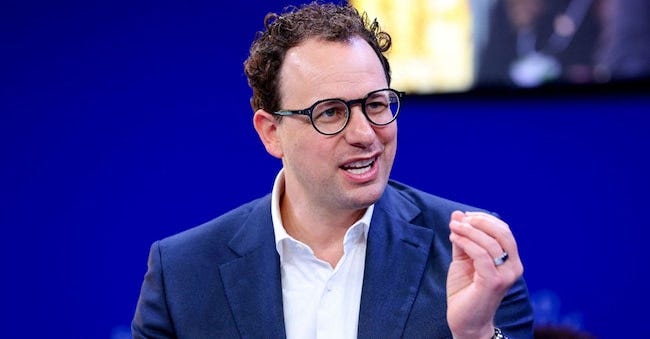
Last week, I listened to Derek Thompson’s podcast, Plain English, as he discussed Anthropic’s Claude Mythos —their “too-dangerous-to-publicly-release” new AI model— with the prolific New York Times tech writer and podcaster, Kevin Roose. The two touched on many facets of Anthropic’s spooky-sounding announcement that Mythos was too good at software hacking to be given over to the public in any regard.
One thing they discussed was whether Mythos’ capabilities were a national security concern. After all, Mythos proved frighteningly good at detecting software exploits, discovering zero-day vulnerabilities in some of the most pored-over and secure software in the world, i.e. “a now-patched 27-year-old bug in OpenBSD, a 16-year-old flaw in FFmpeg, and a memory-corrupting vulnerability in a memory-safe virtual machine monitor,” according to Ravie Lakshmanan at TheHackerNews. Mozilla, creators of the Firefox browser, wrote a blog post earlier this week claiming that Mythos (to which they and a few-dozen other companies had been given special access) had found “271 vulnerabilities identified during this initial evaluation.” Doing the same thing with Anthropic’s last model, Opus 4.6, resulted in “fixes for 22 security-sensitive bugs in Firefox 148.” For those amateur mathematicians among you at home, I can confirm your suspicions: 271 is way bigger than 22.
And yet, Thompson and Roose’s conversation was recorded before this week’s earth-shaking news: this very same Claude Mythos model, within a few weeks of its existence being confirmed, had been itself hacked!
According to Mary Cunningham at CBSNews on Wednesday, “Anthropic is investigating a possible breach of Mythos…from one of its third-party vendor environments, an Anthropic spokesperson told CBS News in an email.” While I haven’t seen the “how did this happen” of it all widely-reported in the media, a number of Twitter users have surmised the more-or-less stunning sequence of events that led to Mythos’ breach:


In short: a small group developers gained access to Mythos through some combination of illicit activity, third-party credentials being leaked, and sheer dumb luck, more or less guessing the URL endpoint based on Anthropic’s prior naming conventions.
Part of Roose and Thompson’s discussion —as well as part of Isaac Saul’s breakdown on the subject for Tangle, which I quoted from last week— focused on whether the Mythos announcement (so dangerous! so superior! so terrifying!) was more a matter of marketing than actual capability. This is a refrain I’ve heard frequently: if any of us were running a frontier AI lab, and we wanted to generate hype for a product, wouldn’t we do so with exactly the same verbiage? “Too dangerous for public release.” Because the most sought-after products are those you can’t have. I’ll let Birkin Bags be proof of that, now and forevermore.
Probably, Anthropic’s announcement was dual-aimed. They likely did want to acknowledge their new product offering in a way which drummed up enthusiasm, but they also seem to have developed an AI model otherworldly in its ability to detect and exploit software vulnerabilities. Sure, Anthropic could have kept this model clandestine, making Mythos a secret which only a small handful of employees and partner companies could know about. Alas, they wanted to get some marketing out of it and so chose to publicize what they had made. The consequence of that decision was Anthropic learning the lesson every television writer has had to contend with for the last 20 years:
The internet, as we all know by now, is undefeated.
I’ve probably written before about my disdain for Game of Thrones’ ending, which I will now somewhat spoil for you. After seven arduous seasons all building-up to a world-defining conflict between human civilization and that of the northern ice zombies (more-or-less) teased since the opening moments of its very first scene, the show pivoted inanely in their 78-minute antepenultimate episode, banishing the entirety of the seismic threat almost as soon as it was finally upon us. That utterly inconceivable choice led to a finale characterized by undeserved melodrama and incomprehensible character decisions. That seismic threat was completely forgotten, barely even discussed thereafter. People have long wondered how a show theretofore characterized by tight plotting, intricate character development, and world-class foreshadowing could have blown its load so prematurely. Some said the show’s creators, David Benioff and D.B. Weiss, were deeply burnt-out and desperate to get the show done with. Others believed that the show was shaky from the moment it ougrew and outpaced the books it was based on.
My theory is a little different.
By the time Game of Thrones’ final season released in 2019, internet sleuths —mostly on Reddit— had been scanning for years through infinitesimal plot details of the books, the show, and the extraneous content George R. R. Martin created within the world so as to elaborate on their exceedingly specific plot predictions. There were hundreds of those predictions. Many of them would not come true, but in every circumstance, one inevitably would. Benioff and Weiss, afraid that internet detective-work would suck the surprise out of their final season, felt it necessary to invent an ending so emotionally and narratively ridiculous it could not possibly be predicted by anyone with a brainstem. Thus, events happened suddenly and without build-up. Thus, worldwide threats were vanquished all-at-once by a series of absurd deus ex machinae. Thus characters behaved in ways antithetical to everything we knew about them. But Benioff and Weiss’ devilish gamble paid-off. Nobody saw the show’s ending coming; nobody would have predicted such a dogshit culmination; nobody thought that the show’s creators would have been prioritizing messy dogshit all along.
Rule 34 of the Internet suggests that, “If it exists, there is porn of it.” But of course: the internet is such a massive and incomprehensible glut of information and action that every manner of content, actions, and actors exist on it. Every show will have its ending guessed by some guy on Reddit. And every AI model will be accessed by four lucky schmucks in a Discord server.
Anthropic has learned the lesson of its narrativistic predecessors: the combined internet cannot be overcome. By simply acknowledging Mythos’ gate-kept existence (and in such a dramatic way) Anthropic challenged the internet’s denizens to break through the gate. That they did as much should come as no surprise; it was always inevitable, whether by force or genius or accident. While I do not fully buy-in to the idea that AI software and tech should be nationalized and regulated equivalently to, say, nuclear weapons, a much higher amount of secrecy needs to be applied to new models if, as claimed, they are capable of global disruption in the wrong hands. Anthropic, Open AI, xAI, Google, the very existence of their newest, mega-charged models must be kept secret: names, abilities, everything.
I would feel differently, more altruistically I suppose, demand more transparency, if I believed the public had —or will have— any power to influence the frontier AI labs. Call me a cynic if you want, but I believe myself a pragmatist: there is no stopping or slowing the creation of more and more powerful, more and more dangerous AI models (not without moving levers of governmental weaponization we also don’t have control over), and so we must collectively support the safe-keeping of these models long-term. The only asset safe from theft is that which thieves are not aware of. I hope this is the lesson gleaned from the Mythos hack: if a weapon’s existence is made public, someone will successfully steal it.
Frontier AI models are not physical weapons, they cannot be stored deep under the earth and surrounded by military guards. They are inherently internet-connected, which makes them inherently vulnerable. At this point, while I am absolutely dubious about the intentions of frontier AI labs and their charismatic leaders, I would prefer those labs having control over dangerous models than random hackers in a Discord server, and I’d make that choice every time. Random hackers don’t have the responsibility to shareholders. They don’t have the threat of legal repercussions. They exist outside the court of public opinion. None of these things are guaranteed to make tech companies/leaders act in the public’s best interest (OBVIOUSLY!!!), but they are more effective weapons than whatever we may wield against some small splinter cell in the Maldives, hacking into banks and government applications willy-nilly.
Safety lessons in the AI realm must be learned by hard-and-fast fuck-ups. It’s miraculous that the Mythos hack has, somehow, not had enormous consequences. If not for those Discord hackers, perhaps it would have been North Korean dissidents, terroristic ideologues, or shadowy mercenary corps that got their hands on Mythos, kept quiet about it, used it to accomplish dastardly deeds. With any luck Anthropic will learn from their mistake, and all the other labs too. It’s one less vector for unintended harm that we would have to worry about. One less security vulnerability to worry about going forward. That has to be a positive, right?
3. The U.S. vs. Justin Sun II: An Escalation

I honestly didn’t expect this saga to elevate much further in the short few days since we last talked about it, but the case of World Liberty Financial (the Donald Trump-family founded crypto company) vs. Justin Sun, founder of the Tron blockchain, is accelerating at unprecedented speed! What only last week was a war-of-words over decentralization and frozen assets has now grown to include lawsuits, subterfuge, and the weaponization of the entire U.S. government against a man who, ultimately, did little more than lodge a complaint on Twitter.
Let’s see what’s going on.
In last week’s newsletter, I enjoyed some serious schadenfreude at the fact that Justin Sun —the largest investor in World Liberty Financial upon launch— learned like the rest of us that the crypto ecosystem is a corrupt and lawless place controlled by the self-enriching whims of the powerful. I guess Sun had thought he was one of the powerful. When Justin Sun publicly accused World Liberty Financial of betraying its stakeholders by threatening to lock their tokens if they did not comply with a rigged internal vote (as explained in the Tweet below), World Liberty Financial went on the public offensive.


On Wednesday, World Liberty Financial’s co-founder Zach Witkoff (son of Trump ally Steve Witkoff, who Wikipedia notes “has served as the United States special envoy to the Middle East and special envoy for peace missions. He has also acted as a de facto envoy to Russian president Vladimir Putin." Definitely no nepotism here!) charged Sun with “[engaging] in misconduct that required World Liberty to take action to protect itself and its users.” Witkoff continued, saying that Sun’s behavior was “a desperate attempt to deflect attention from [his] own misconduct…[and] entirely meritless.”
Donald Trump’s son, Eric, piled-on in his own mean-spirited way, saying, “The only thing more ridiculous than this lawsuit is spending $6 million on a banana duct-taped to a wall,” referencing that Sun purchased Maurizio Cattelan’s much-maligned artwork, Comedian (2019), for that price.
In response, Sun filed a formal lawsuit against World Liberty Financial. As per Aimee Picchi at CBSNews, Sun is “alleging [World Liberty Financial] illegally blocked him from selling digital tokens worth up to $1 billion. The lawsuit, filed on Tuesday in California federal court, also accuses World Liberty Financial of trying to pressure Sun into investing ‘hundreds of millions of dollars to mint USD1, World Liberty's stablecoin.’ The complaint alleges that the company froze his World Liberty Financial tokens after Sun refused to commit more money to the business.”
It should be noted that this kind of machination isn’t unique. As Zach Everson reports for Fortune:
“Binance holds about 87% of USD1, the stablecoin issued by [World Liberty Financial]—a greater concentration than any other major stablecoin has at a single exchange—underscoring the depth of the financial relationship between Binance, whose founder Trump pardoned in October, and World Liberty Financial, which already has added an estimated $1 billion to President Donald Trump’s net worth.”
Because World Liberty Financial has become among Donald Trump’s most successful businesses to date (netting him over $4-billion according to David D. Kirkpatrick at the New Yorker), picking a fight with them is akin to picking a fight with the President of the United States himself. Picchi notes that, “The litigation threatens to chill Sun's relationship with President Trump. The entrepreneur, best known as the founder of blockchain company Tron, revealed last year that he was the largest holder of another Trump-backed crypto token, dubbed $TRUMP.”
We now know that “chilling” is likely a far too generous term for the degradation of Trump and Sun’s relationship. On Thursday —that is exactly two days after Sun filed his lawsuit— over $344-million worth of USDT (the second-largest stablecoin in the world) was frozen by the coin’s operator, Tether. It may not come as a shock that the entirety of that $344-million was located, yes, exactly, on the Tron blockchain. Krisztian Sandor at Coindesk writes that, “The freeze was carried out after authorities flagged the addresses for alleged links to illicit activity, [Tether] said in a blog post on Thursday. The action prevented further movement of the funds.”
Not only that, but freezing such a huge amount of money caused serious consternation within the greater crypto community over fears of centralization at Tron. That’s especially ironic considering Justin Sun said on Monday, “I'm officially announcing: the most decentralized blockchain in the world is Tron.” Twitter users with huge platforms quickly gathered together to jeer Tron for its supposed centralization.


Sandor writes elsewhere for Coindesk that “A U.S. official told CoinDesk that the sanctioned wallets [on Tron] showed material links to the Iranian regime, including transactions with Iranian exchanges and routing through intermediary addresses connected to wallets associated with the Central Bank of Iran,” which resulted in the asset’s being frozen. Not to put on my tin foil hat, but it all seems quite coincidental, doesn’t it?
On Monday, Sun touts his own blockchain’s decentralization.
On Tuesday, he files a lawsuit against Donald Trump’s crypto venture.
On Thursday, hundreds-of-millions of dollars on his blockchain are frozen by a centralized entity.
Sandor notes in his initial article that Tether, “is also pushing deeper into the U.S. market. It launched the USAT token compliant with federal stablecoin regulation…[and] is also preparing for a full audit of its reserves for the first time… to improve transparency and align more closely with tighter regulatory expectations toward stablecoins.”
So altogether, you have a very wealthy threat to Donald Trump’s crypto hegemony. You have unnamed U.S. officials teaming with a company seeking regulatory acceptance in the United States to materially damage that threat. Because of that damage, the threat stands to suffer both cultural and financial consequences.
I’m obviously not alleging that Donald Trump or his family are using the levers of the U.S. government to punish Justin Sun for his dissent, but if Donald Trump or his family were to use the levers of the U.S. government to punish Justin Sun for his dissent, this would probably be the way they’d go about it, right? Pressure security officials to pressure an economically vulnerable company to inflict economic hardship on an enemy actor?
Sun filed his lawsuit in California court, so perhaps he may find judges sympathetic to what may well be legitimate legal complaints against World Liberty Financial. But Donald Trump, who frequently leverages his station to pressure companies and move markets, is a powerful enemy. I suppose it’s not so surprising in hindsight that this war of words would so quickly, and dramatically, escalate into judicial and economic attacks. Would any of us be surprised if we were right back in this newsletter next week discussing Justin Sun’s arrest? The collapse of his blockchain? Shot by snipers on the tarmac of a foreign airport?
I wish I weren’t so serious.
DeCC0 of the Week
Art in the Wild
Quote of the Week
“Art is anything people do with distinction.”
Do you have some news that simply must be shared? Send us a DM